



Why can one Ceylon tea be light and delicate while another is rich, strong and astringent? Often, the answer lies in the elevation where the tea bush was grown.
What does elevation classification mean for tea?
Sri Lanka is one of the few countries where tea is officially classified according to the elevation of its growing region.
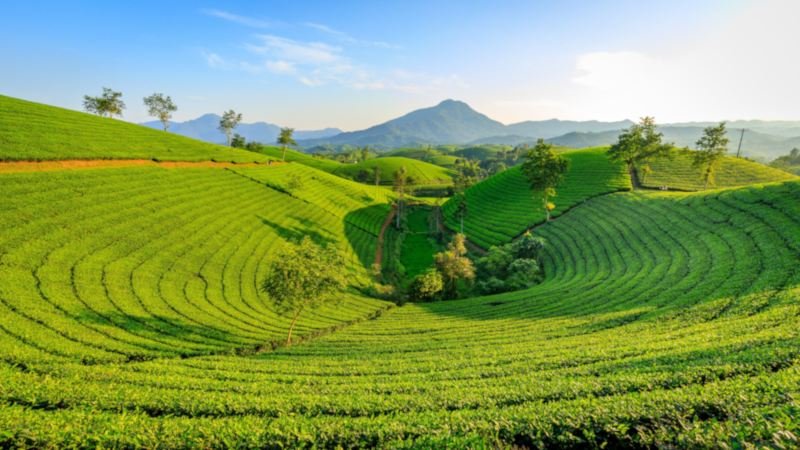
Height above sea level affects air temperature, rainfall, the intensity of sunlight and the rate at which tea leaves grow. Together, these factors shape the flavor of the finished drink.
That is why Ceylon teas are divided into three main categories:
- High Grown—tea from high-altitude regions;
- Mid Grown—tea from mid-elevation estates;
- Low Grown—tea from lowland regions.
High Grown: elegance and subtle flavor
High Grown tea is cultivated more than 1,200 meters above sea level.
The highlands are cooler and mistier, so the tea bush grows more slowly. This gives the leaves time to accumulate more aromatic compounds and develop a more complex flavor profile.
These teas typically offer:
- a lighter infusion;
- a fresh aroma;
- floral notes;
- gentle briskness;
- a refined finish.
Nuwara Eliya, Uda Pussellawa and Dimbula are among Sri Lanka’s best-known high-grown tea regions.
Mid Grown: the best of both worlds
Mid Grown tea is cultivated at elevations of 600 to 1,200 meters. The climate is warmer, and the growing conditions combine features of both highland and lowland regions.
These teas are known for:
- a deeper-colored infusion;
- balanced flavor;
- moderate strength;
- a pronounced aroma;
- a harmonious balance of freshness and body.
Many experts consider mid-grown teas the most versatile choice for everyday drinking. They taste equally good on their own or with milk or lemon.
Low Grown: the power of the sun
Low Grown tea is cultivated up to 600 meters above sea level. These regions receive more sunshine and heat, and the leaves grow faster. The result is a tea with a more energetic character.
Low-grown teas tend to have:
- a dark, intense infusion;
- full-bodied flavor;
- lively briskness;
- honeyed and fruity notes;
- a lingering finish.
They are especially appreciated by people who enjoy strong black tea with a bold, straightforward flavor.
Is there a “best” elevation for growing tea?
The short answer is no. A common misconception is that High Grown tea is always better than Mid Grown or Low Grown tea. In reality, elevation defines a style rather than a level of quality.
High-grown teas captivate with refinement and aromatic complexity. Low-grown teas bring richness and expressive flavor. Mid-grown teas occupy the space between them, combining qualities of both categories.
Professional tea tasters often draw on several elevation categories when creating blends, bringing flavor and aroma into ideal balance.
When you brew Ceylon tea, you are tasting the influence of the climate, mountains, sun and soil of the region where it grew.
This is what we call tea terroir: the natural conditions that give a drink its individual character.